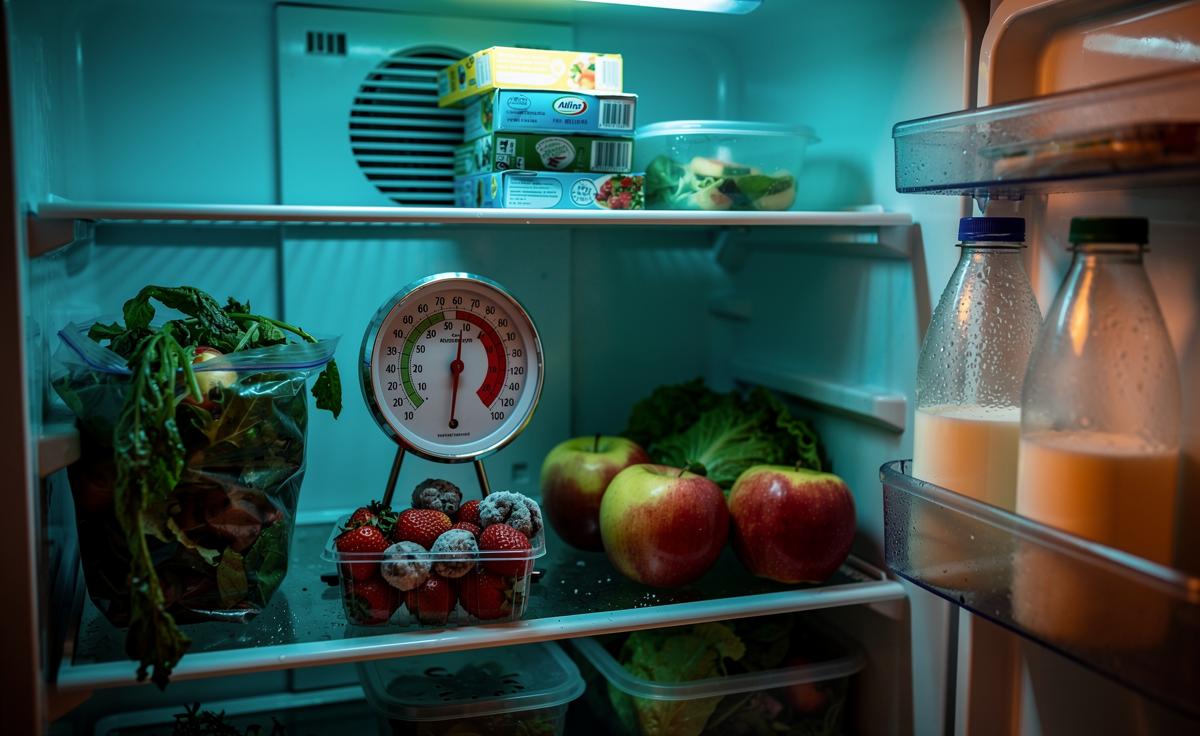
In a nutshell
- 🌡️ The overlooked mistake is trusting the fridge dial—temperatures above 5°C speed up spoilage; aim for a stable 0–4°C using a real thermometer.
- 🚪 Airflow and zones matter: the door is warmest, back of lower shelves are coldest—keep milk and high‑risk foods off the door and don’t block vents.
- 🥗 Master crispers: use high humidity for leafy greens, low humidity for berries and mushrooms, and separate ethylene producers (apples, tomatoes) from sensitive veg.
- 🛠️ Quick wins: place a £3–£8 thermometer mid‑shelf, cool leftovers within 2 hours, keep the fridge 65–75% full, clean seals, label dates, and use FIFO.
- ⚖️ Why colder isn’t always better: ultra‑cold zones can freeze greens; a steady 3–4°C outperforms a fluctuating 1–7°C—prioritise precision over extremes.
Fresh strawberries that fuzz over in two days, bagged salad that wilts before midweek, milk that turns just shy of the sell‑by date—many households blame the supermarket or the weather. Yet the real offender is often inside our kitchens. The overlooked mistake? Trusting the fridge dial and not the actual temperature. Unlike an oven, a fridge’s internal climate varies wildly with loading, door openings, and room heat. When your chiller runs above 5°C, bacteria have a head start, and freshness evaporates fast. With UK food prices still biting and waste rising, a few evidence‑based tweaks can safeguard flavour, nutrition, and your budget.
The Quiet Culprit: A Warm Fridge Behind a Cold Dial
It feels counterintuitive: your fridge light clicks on, the motor hums, the dial says “3”—surely it’s cold enough. But laboratory spot checks and consumer tests consistently find a big gap between the setting and reality. The Food Standards Agency advises 5°C or below (ideally 0–4°C). In practice, busy family fridges often sit at 6–8°C by evening, especially after the weekly shop or a roast that’s stashed away still warm. This small temperature creep can halve the shelf life of fresh produce and cooked leftovers. Pathogens multiply faster, spoilage microbes feast on moisture, and delicate greens collapse.
The fix costs less than a coffee: a £3–£8 fridge thermometer. Place it on the middle shelf, away from the door, and check morning and evening for a week. If it averages above 5°C, nudge the control colder and reassess. Watch for stealthy warmers: “eco” modes that ease off cooling, holiday settings accidentally left on, and overloaded shelves that trap heat. A quick calibration now prevents sour milk tomorrow and protects high‑risk foods like ready‑to‑eat meats.
- Target range: 0–4°C (32–39°F)
- Red flag: Persistent readings ≥6°C
- Simple rule: Trust a thermometer, not the dial
Airflow, Zones, and the Door Trap
Even at the right overall temperature, microclimates inside your fridge make or break freshness. Cold air sinks and flows from vents; the back is chillier, the door is warmest. That’s why milk spoils quickly when parked in the door: it rides through the biggest temperature swings. Likewise, covering vents with boxes or foil trays stops circulation, creating lukewarm pockets where salad turns limp and berries mould. Where you put food often matters as much as how cold the fridge is. Think of your fridge like a small weather system—place items where the “climate” suits them, and don’t block the breeze.
Use this quick‑glance map to store smarter and extend freshness without spending a penny. Keep raw meat low to avoid drips, dairy and cooked foods mid‑shelf for stability, and condiments—tolerant of warmer temps—in the door. If your appliance has adjustable shelves, allow a few centimetres between items so air can circulate freely around produce and containers.
| Zone | Typical Temp | Best For | Avoid |
|---|---|---|---|
| Back of Lower Shelf | 1–3°C | Raw meat, fish, ready‑to‑eat deli | Leafy greens (risk of freezing) |
| Middle Shelf | 3–5°C | Dairy, leftovers, cooked meats | Raw meat (drip risk) |
| Door Racks | 5–7°C | Condiments, juices | Milk, eggs (shorter life) |
| Crisper: High Humidity | 3–5°C | Leafy greens, herbs | Apples, pears (ethylene emitters) |
| Crisper: Low Humidity | 3–5°C | Berries, mushrooms | Leafy greens (drying) |
Crisper Drawers, Humidity, and Ethylene: Why Salad Goes Soggy
Those sliders on your crisper drawers aren’t cosmetic; they set humidity. A near‑closed vent traps moisture for leafy greens, stopping wilting. A more open vent lets moisture escape, keeping berries and mushrooms dry and mould at bay. Then there’s ethylene, an invisible ripening gas. Apples, avocados, and tomatoes emit plenty; lettuce and broccoli are sensitive and deteriorate faster when stored together. One misplaced apple can sabotage an entire drawer of salad. Treat your crispers as two distinct zones—one moist sanctuary for greens, one drier cave for tender fruits and fungi—and your shop will last the week.
A quick, real‑world test: a South London couple I interviewed found their salad leaves lasted three extra days after moving apples out of the greens drawer and closing the humidity vent. Berries kept on a paper towel in the low‑humidity drawer stayed firm until Friday. Small, targeted moves like these beat blanket “fridge hacks” because they align with plant physiology—moisture balance and gas exposure—rather than vague rules of thumb.
- Ethylene producers: Apples, pears, bananas, avocados, tomatoes, kiwis
- Ethylene sensitive: Lettuce, broccoli, cucumbers, leafy herbs, strawberries
- Pro tip: Rinse berries only before eating; store dry on paper towel
Quick Fixes: Simple Checks and Habits That Pay Off
Settle the fundamentals first. Place a thermometer mid‑shelf and aim for 0–4°C. Cool leftovers quickly—split into shallow containers—and refrigerate within two hours. Don’t overfill: 65–75% fullness keeps air moving while stabilising temperature. Label tubs with the date and adopt a “first in, first out” front‑row policy for anything perishable. Deep‑clean shelves and the door seal monthly; grime compromises the gasket’s grip and lets cold air leak. Finally, keep an eye on maintenance: vacuum dusty coils on older models and replace cracked seals to restore cooling efficiency and preserve a steady chill that protects food quality.
Some readers ask whether dropping to 0–1°C is “extra safe.” It can be—for dairy and cooked meats—but there are trade‑offs. Ultra‑cold zones may freeze greens and accelerate texture damage in some fruits. The sweet spot depends on what you store most and your fridge’s consistency. Precision beats extremes: a stable 3–4°C outperforms a see‑sawing 1–7°C. If your model has a “super cool” function for the big shop, use it for 24 hours, then revert. Small, repeatable habits prevent waste—and make Monday’s milk taste like Saturday’s.
- Why colder isn’t always better (Pros vs. Cons)
- Pros: Slows bacteria, extends dairy and cooked food life
- Cons: Risk of freezing greens, texture loss for soft fruit
In a country where WRAP estimates millions of tonnes of edible food are binned each year, the cheapest fix starts at home: measure your fridge temperature, respect its zones, and match humidity to what you store. These steps don’t demand gadgets, just awareness. The payoff is immediate—fewer sad salads, longer‑lasting berries, and safer leftovers—plus a quieter energy bill and lighter environmental footprint. If you placed a thermometer in your fridge tonight and reshuffled by zone tomorrow, which item do you think would last noticeably longer by week’s end, and what would you change first to make that happen?
Did you like it?4.5/5 (22)