In a nutshell
- 🌬️ Lowering CO2 helps sleep, but a cracked window can import PM2.5 and NO2—so “fresh” air isn’t always clean; context (roadside vs. quiet area) determines the gain.
- 🚦 Street noise and light raise microarousals and suppress melatonin; aim for sub-40 dB nights with blackout blinds and by closing the street-facing window.
- 🌡️ Comfort isn’t linear: target 16–18°C; avoid draughts and humidity swings; manage pollen and mould spores with pre-cooling, fine-mesh screens, or a low-speed HEPA purifier.
- 🛡️ Mind security and energy loss; a door-ajar approach with trickle vents and HEPA can keep CO2 under 900 ppm without added noise or cold.
- 🧭 Act smart: do a short purge-vent, then seal; use acoustic curtains/blinds, ventilate from the quieter side, and tailor tactics to the main trigger—noise, chill, pollen, or stuffiness.
Across the UK, many of us leave the bedroom window slightly ajar at night, trusting a whisper of “fresh air” to coax better sleep. It feels intuitive, even wholesome. Yet the science — and a growing body of lived experience — suggest the habit can be a mixed blessing. A cracked sash can indeed lower stale CO2 and help you feel less stuffy, but it can also import noise, pollutants, draughts, and disruptive light. Small nighttime changes can reverberate through your next day’s energy, mood, and focus. Understanding the trade-offs — and the smarter alternatives — can turn a familiar ritual into a genuinely restorative strategy.
Ventilation, CO2, and the Myth of Fresh Night Air
Ventilation matters: exhaled air can drive bedroom CO2 above 1,500 ppm by the small hours if the door and windows are shut, nudging you towards headaches, grogginess, and more frequent awakenings. Crack a window and those levels may drop to 600–900 ppm, which many lab studies associate with deeper, less fragmented sleep. But “fresh” is not the same as “clean”. If you live by a busy A-road or next to late-night venues, that cooler inflow may also carry PM2.5, NO2, and odours. Air that smells crisp can still be polluted enough to nudge heart rate variability and sleep quality the wrong way. In other words: the window is a lever, not a panacea — and where you live strongly determines what it pulls in.
| Factor | Potential Benefit (Window Ajar) | Potential Downside (Window Ajar) |
|---|---|---|
| CO2 levels | Lower, supporting deeper sleep | None if outdoor air is clean; minimal gain if door already open |
| Air quality | Can reduce indoor odours and VOCs | May import PM2.5/NO2 near roads or late traffic |
| Temperature | Cooler room, easier sleep onset | Overcooling and draughts causing restless tossing |
| Humidity | Refreshes humid rooms | Can invite damp air or condensation in coastal/river areas |
| Noise/light | Occasional relief if indoor noise worse | Traffic, sirens, street lamps intrude |
In UK homes with double glazing, trickle vents, or a cracked internal door, you can secure the CO2 gains without flinging a sash wide. Consider a short “purge-vent” early evening, then close the street-facing window and open a quieter courtyard one. Better sleep seldom requires a fully open window; it requires targeted, controllable ventilation. If you’re in a high-pollution zone, a bedroom HEPA filter plus door-ajar strategy often outperforms an outdoor-facing micro-gap.
Noise, Light, and Microarousals You Rarely Notice
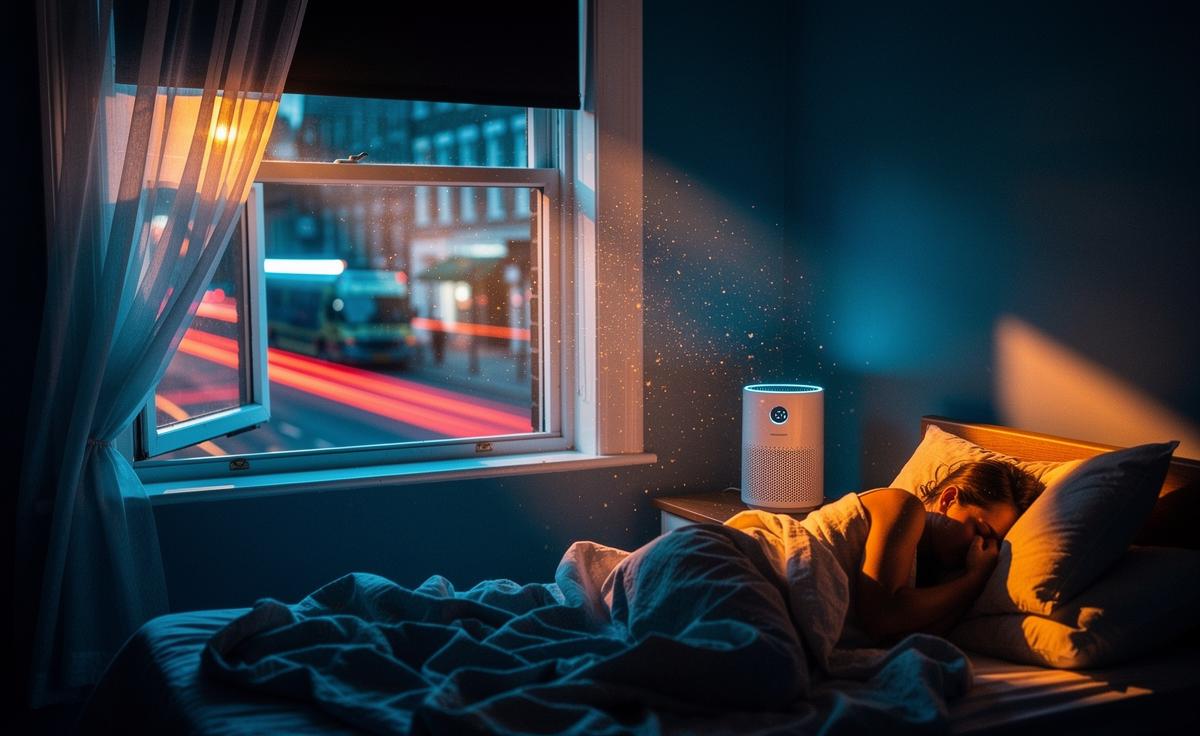
Even when you don’t fully wake, brief microarousals fragment sleep. The WHO suggests average night noise outdoors below roughly 40 dB; many UK urban streets exceed that as taxis, deliveries, and late trains rumble by. Crack the window and those spikes become sharper indoors, pushing heart rate and nudging you out of deep sleep. Street lighting adds a second punch: blue-rich LEDs sneaking through a gap can blunt melatonin and shift your circadian rhythm. You may think you “slept through it”, yet your tracker — or your 11 a.m. brain fog — tells a truer story.
Consider the lived case of a Manchester reader who loved a cool breeze but felt oddly shattered. A weekend experiment — window latched, blackout blinds down, internal door open — cut the night’s noise spikes from 45 to 29 events on a basic phone meter, and next-morning grogginess eased. You don’t need fancy kit to spot patterns: watch for nights when you wake before the alarm, jaw tight or shoulders pinned, and recall a siren or shout drifting in. Typical window-amplified culprits include:
- Transport: early HGVs, late buses, flight paths
- Urban life: pub closing time chatter, bins, scooters
- Infrastructure: hums from HVAC, rail points, generators
- Light spill: street LEDs, neighbours’ security lamps
Temperature, Humidity, and Allergens: Why Comfort Isn’t Linear
In Britain’s swingy weather, comfort is a moving target. The NHS and sleep charities commonly point to a bedroom around 16–18°C for most people. A cracked window can help you drop into that Goldilocks zone in summer; in spring and autumn, though, it can tip you into too cold, too fast. Draughts over exposed skin trigger micro-movements and blanket battles, raising sleep fragmentation. Humidity matters, too. If you live near the coast or a river, night air can be damp, inviting clamminess and condensation on cooler panes. In very dry cold, the opposite occurs: nasal passages dry, you mouth-breathe, and snoring worsens.
Allergens add a stealth layer. The Met Office notes grass pollen surges in late spring and summer, with dawn and dusk often lively; an open window can usher pollen and mould spores straight to your pillow. For hay fever sufferers, a slightly open window may trade coolness for congestion. Practical tweaks help: shower before bed, keep outdoor clothes out of the bedroom, and use fine-mesh screens or an air purifier on low. If you love that cool edge, try pre-cooling: open the window wide for 15–20 minutes early evening, then shut it and rely on breathable bedding and a light duvet to hold the sweet spot overnight.
Safety, Energy, and Practical UK Fixes
There’s a pragmatic side: ground-floor and basement flats face security concerns, and even upper floors can be risky in gusty weather. Meanwhile, leaving a window ajar through colder months leaks paid-for heat — not trivial with UK energy prices yo-yoing. A London couple in Bethnal Green shared smart-sensor data with us: with the sash cracked all night in winter, bedroom CO2 dipped nicely but energy use rose 14% week-on-week; switching to trickle vents, a door-ajar policy, and a small HEPA unit kept CO2 under 900 ppm while trimming the gas bill.
The best approach is layered and local. If you’re roadside, prioritise filtration and acoustic control (seal the street window, use acoustic curtains), and ventilate via a quieter facade or stairwell. If you’re inland-suburban with low pollution, a narrow night latch plus blackout blinds can be a tidy win. Better ventilation doesn’t have to be louder, brighter, or colder. Low-fuss options include:
- Purge, then seal: Air the room before bed; close the noisy window for the night.
- Door-ajar strategy: Use the home’s volume as a buffer; CO2 disperses without street intake.
- Trickle vents or window limiters: Controlled airflow, improved security.
- HEPA purifier + fan on low: Cleaner air and gentle mixing without draughts.
- Acoustic blinds/curtains: Cut light and soften nighttime spikes.
Leaving a window slightly open can absolutely help — but only when it reduces stale air without inviting in the wrong kind of night. CO2, noise, light, temperature, humidity, and allergens all jockey for control over your sleep architecture, and small tweaks can tip the balance. The trick is to ventilate with intent, not habit. Which factor most shapes your nights — noise, chill, pollen, or stuffiness — and what simple experiment will you run this week to find your personal sweet spot?
Did you like it?4.4/5 (21)