In a nutshell
- 🧭 Build routines with habit stacking, zones, and timeboxes; prioritise prevention for UK realities like muddy entries and hard water—because consistency beats intensity.
- 🧹 Use 2–6 minute micro-tasks room-by-room to maintain a steady-state clean; add one rotating “floater” task daily so deep cleans shrink over time.
- ⏱️ Follow a 20-minute plan: 4 min bathroom AM, 6 min kitchen after breakfast, 5 min floors in the evening, 5 min living/bedroom anytime; add a Sunday stretch task and keep tools visible to reduce friction.
- ⚖️ Weigh daily drizzle vs weekly blitz: drizzle curbs build-up and protects finishes, while blitz offers a big reset; the recommended hybrid blends daily light work with one heavier weekly job.
- 🧰 Choose multi-use tools, colour-coded microfibres, and a wall-docked vac; leverage vertical space (rails, hooks, slim carts) and a “quicksave basket” for rapid resets in small homes.
Small UK homes can be a joy to live in—shorter hoovering runs, fewer rooms to dust—yet clutter and crumbs seem to multiply the moment you turn your back. The fix isn’t heroic weekend marathons; it’s a daily cleaning schedule that blends quick micro-tasks with smart sequencing. In reporting from flats in Leeds to terraces in Portsmouth, I’ve seen that consistency beats intensity. With a few tools at arm’s reach and tasks that take five minutes or less, your space stays guest-ready without stealing your evenings. Here’s a practical plan tailored to small UK homes, built for tight hallways, tiny kitchens, and busy lives.
Principles of a Daily Cleaning Schedule
A small home needs routines that compress time and reduce friction. Anchor tasks to moments you already do—boil the kettle, start the shower, wait for the microwave. This is habit stacking: wipe the hob while the toast browns; squeegee the glass after rinsing shampoo. When actions are chained, you never “start cleaning”—you just continue. Keep a caddy with essentials—microfibre cloths, a gentle multi-surface spray safe for stone and laminate, a bathroom descaler for limescale-prone areas, and a compact cordless vacuum—so you’re never hunting for supplies.
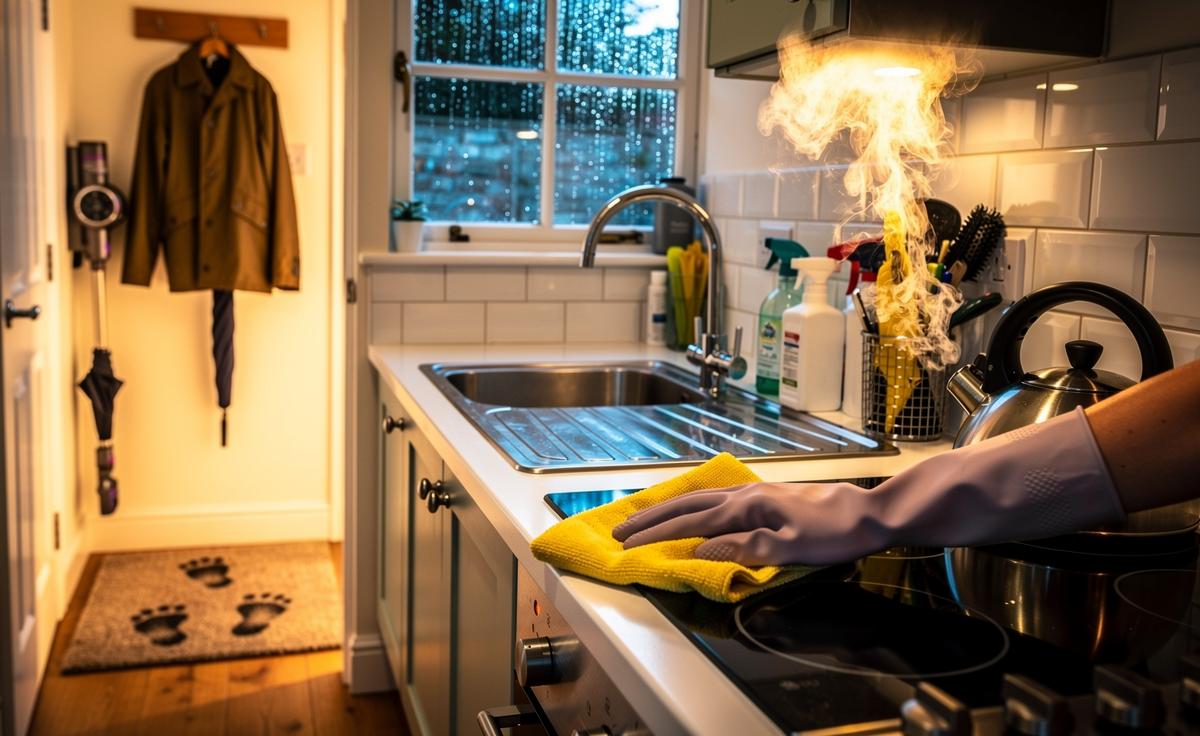
Think in zones and timeboxes. Give the bathroom 4 minutes after your morning shower, the kitchen 6 minutes after dinner, and a 5-minute “floors and surfaces sweep” before bed. In my test run inside a 42m² one-bed flat, this rhythm kept the home tidy in under 20 minutes a day. The UK twist matters: plan for muddy entries and wet coats by staging a mat plus a hook by the door; in hard-water regions, prevent rather than battle limescale with a daily spritz and quick wipe. Prevention saves more time than any miracle product.
Room-by-Room Micro-Tasks That Actually Fit Your Day
Micro-tasks are the secret to staying ahead in tight spaces. They’re small, satisfying, and hard to skip. Use them to chip away at hotspots before they become big jobs. The goal isn’t spotless; it’s steady-state clean—consistently decent, occasionally polished. Below, typical UK pinch points meet actions you can do in 2–6 minutes without turning your life upside down.
- Hallway/Entry: Shake mat; hang coats; corral shoes in a basket; 60-second sweep of grit. Place parcels and post in one tray.
- Kitchen: Degrease hob splash, load/unload dishwasher or washing-up bowl, shine sink, wipe handles and light switches.
- Bathroom: Squeegee glass; quick descaler on taps; wipe basin and loo seat; swap damp towels for a fresh hand towel midweek.
- Living Area: Cushion reset, fold blankets, clear coffee table, cordless vac under sofa edge, dust top surfaces.
- Bedroom: Make bed hotel-tight; laundry to one hamper; 2-minute wardrobe tidy; dust bedside and charge station.
When everything has a home, cleaning becomes returning items, not wrestling chaos. Highlight one “floater” task per day—clean microwave on Monday, descale shower on Tuesday, change bedding Wednesday—so deep-clean needs shrink. The cumulative effect is powerful: 10 tiny wins beat one giant sprint.
Sample 20-Minute Plan with UK Timings
Here’s a compact plan that slots around a commuter’s day or a WFH lunch break. It’s biased toward UK realities—rainy entries, quick kettles, small sinks—and uses moments you already have. Repeatable sequences reduce decision fatigue, so you spend less time thinking and more time finishing.
| Time | Room/Zone | Task | Why It Works |
|---|---|---|---|
| Morning (4 min) | Bathroom | Squeegee shower, wipe basin and taps, quick loo seat clean | Prevents limescale and soap scum; stops build-up cold |
| After Breakfast (6 min) | Kitchen | Load dishes, wipe hob and counters, shine sink | Grease tackled while new; no baked-on battles |
| Evening (5 min) | Floors | Cordless vac high-traffic paths, shake doormat | UK grit and crumbs vanish before spreading |
| Anytime (5 min) | Living/Bedroom | Cushion reset, clutter basket sweep, quick dust | Visual tidy resets the room’s baseline |
On Sundays, add a single “stretch task” (change bedding, mop, oven door glass) for 10–15 minutes. Keep tools visible—a slim vac parked by the hallway and a spray/cloth under each sink—so action beats procrastination. If it takes less than two minutes, do it now.
Pros vs. Cons: Daily Drizzle vs. Weekly Blitz
Two philosophies dominate British cleaning chats: the daily drizzle and the weekly blitz. Both can work, but they fit different lives and floor plans. Here’s the plain truth from dozens of interviews with renters, sharers, and young families: space size and routine stability decide the winner.
- Daily Drizzle – Pros: Lower stress; mess never snowballs; guest-ready baseline; easier with pets/kids; minimal weekend sacrifice.
- Daily Drizzle – Cons: Needs habit discipline; shared homes require buy-in; can feel “never done.”
- Weekly Blitz – Pros: One-and-done catharsis; suits variable shifts; good for those who love a big reset.
- Weekly Blitz – Cons: Easy to skip; build-up harder to scrub; weekends get swallowed; clutter overwhelms small spaces faster.
Why a Single Deep-Clean Day Isn’t Always Better
In compact homes, grime concentrates—steam in tiny bathrooms, condensation on sash windows, crumbs in galley kitchens. Waiting a week turns light films into scrubbing jobs. A drizzle approach protects finishes (especially softwoods and rented laminate) because you’re using gentle products more often instead of harsh ones in a panic. The hybrid I recommend: drizzle daily, then rotate one heavier task on Sunday. It’s kinder to budgets, surfaces, and sanity.
Tools, Supplies, and Storage Tricks for Small Spaces
Kit matters—especially when cupboards are scarce. Opt for multi-use tools and stash them where work happens. In hard-water areas, keep a non-scratch descaler in the bathroom; in older terraces with draughts, choose a slim vac head for skirting dust. Right tool, right place, right size is the golden rule.
- Essentials: Microfibre cloths (colour-coded), mild multi-surface spray, bathroom descaler, washing-up liquid, glass cleaner, baking soda.
- Hardware: Cordless stick vac, collapsible bucket, squeegee, scrubbing pad, extendable duster for picture rails.
- Storage: Over-door hooks, under-sink caddy, magnetic strip for cloths, slim rolling cart for cleaning kit.
- Consumables: Compostable bin liners, refillable concentrates to cut plastic, a doormat that actually traps grit.
Use vertical space: mount a small rail under the sink for spray bottles; add a narrow shelf above the loo for loo roll and a plant; park the vac on a wall dock near the hallway. Label cloths—bathroom, kitchen, general—to prevent cross-contamination. And keep a “quicksave basket” to scoop stray items before company arrives. Small homes reward smart staging more than big scrubs.
Done daily, cleaning becomes background music, not the main act. Your future self benefits from tiny moves you hardly notice: a squeegee here, a vacuum pass there, a two-minute clear-down after tea. Keep the plan light, consistent, and visible on the fridge so everyone can pitch in. What one micro-task could you start today that would make tomorrow’s cleaning easier—and how will you bake it into a moment you never skip?
Did you like it?4.4/5 (22)