In a nutshell
- 💧 Hard-water fixes: Use citric acid to descale kettles, a vinegar soak for shower heads/screens, and a bicarbonate paste on tiles; keep buildup down with quick squeegee routines and soda crystals for drains—never mix vinegar with bleach.
- 🧂 Pantry power: Rely on white vinegar, bicarbonate of soda, citric acid, castile soap, and soda crystals; simple recipes replace multiple sprays—glass cleaner, all-purpose spray, and oven paste—while avoiding acids on stone surfaces.
- 🏠 Room-by-room wins: Fast, repeatable hacks for hobs, ovens, bathroom glass, windows, laundry, and carpets deliver measurable results—fewer smears, faster wipe-downs—with microfibres and smart dilutions.
- ♻️ Safety and sustainability: Label bottles, spot-test, ventilate, and store acids/alkalis apart; curb microfibre shedding with wash bags/filters, choose refills, glass sprayers, and cardboard-packaged soda crystals.
- ⚖️ DIY vs. store-bought: DIY is cheaper and transparent but not a disinfectant; certified eco products offer reliability at a higher cost—use DIY for daily upkeep and certified cleaners for hygiene-critical tasks.
Eco-friendly cleaning in the UK is no longer a niche hobby—it’s a practical response to rising costs, hard-water realities, and the tidal wave of plastic under our sinks. As a reporter who has tested these methods from Birmingham semis to breezy coastal flats, I’ve found that low-tox, low-cost routines can outshine branded sprays without sacrificing shine. The key is targeted swaps, not a wholesale purge. Think bicarbonate of soda for scrub, white vinegar for dissolve, and microfibre for lift. Start small, label well, and measure results—whether that’s fewer smears on a window, a quieter kettle boil after descaling, or a bathroom that stays fresher between deep cleans.
Hard-Water Home Realities: Limescale, Soap Scum, and Smart Fixes
Much of England—especially the South and East—lives with stubborn limescale that mutes taps, streaks shower screens and slows kettles. The antidote is gentle acidity and a little patience. For kettles, dissolve 1 tablespoon of citric acid in half a kettle of warm water, leave 30 minutes, rinse twice, and bring to a full boil once with clean water. Shower heads respond to a 1:3 mix of white vinegar and water: bag it around the head, soak an hour, then brush gently. Acidic solutions lift mineral deposits without the harsh fumes, and you’ll often notice faster heat-up times and brighter chrome.
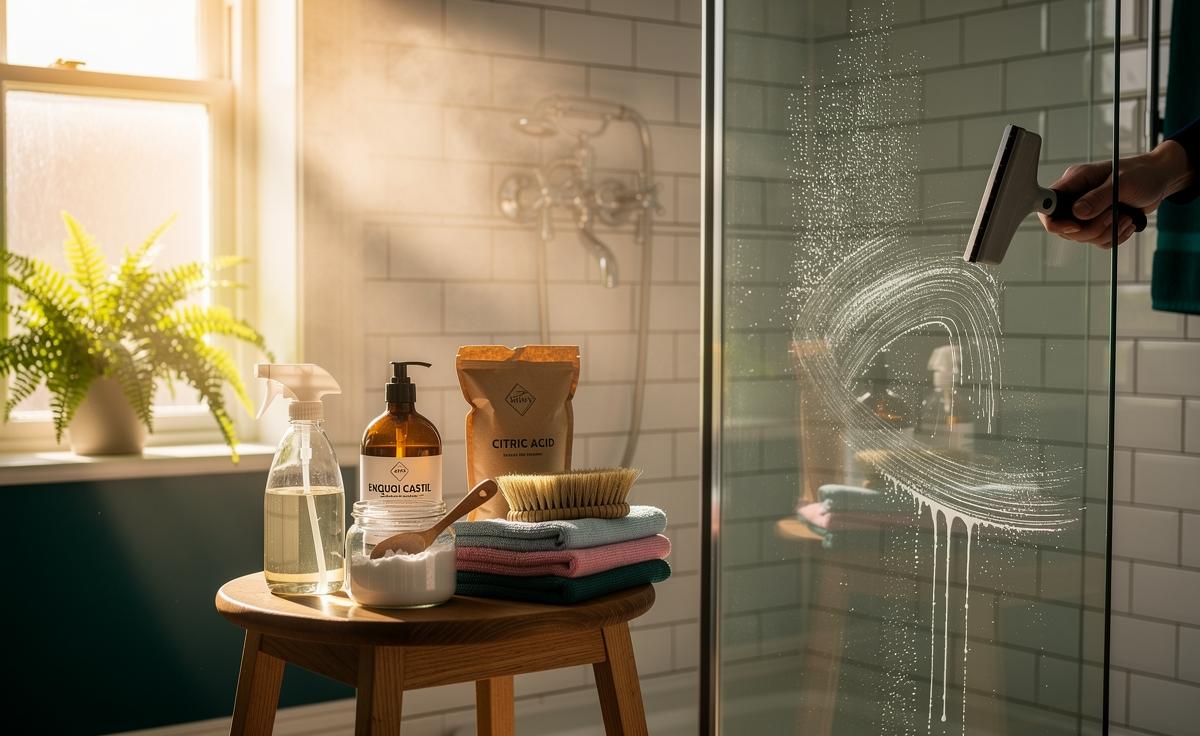
Glass shower screens are another battlefield. Mist a 50:50 vinegar-water solution, wait five minutes, then buff with a dry microfibre. Streaks usually vanish, and soap scum surrenders. For baths and tiles, a paste of bicarbonate of soda and warm water delivers mild abrasion that won’t gouge enamel. To keep build-up at bay, a weekly routine works wonders: quick rinse after showers, a squeegee swipe, and a fast polish of taps with a slightly damp cloth. Prevention beats heroic weekend scrubbing and trims both water and product use.
Drains and odours? Pour a kettle of hot water, then a half-cup of soda crystals; wait ten minutes and flush again. It loosens residue without caustic drain openers. Never mix vinegar with bleach—this produces toxic fumes. Space tasks through the week and you can keep limescale to a whisper, even in hard-water postcodes.
Pantry Staples That Punch Above Their Weight
Before you buy another neon spray, audit your cupboard. A handful of staples tackles most jobs: white vinegar (descale, deodorise), bicarbonate of soda (degrease, gentle scrub), castile soap (all-purpose surfactant), citric acid (limescale), and soda crystals (laundry and drains). Below is a quick-reference guide you can print and tape inside a cupboard door.
| Ingredient | Best For | Pros | Cons / Cautions |
|---|---|---|---|
| White Vinegar | Glass, chrome, descaling | Cheap, deodorises, cuts mineral film | Can etch stone; sharp odour; never mix with bleach |
| Bicarbonate of Soda | Ovens, sinks, fabric odours | Gentle abrasive, fragrance-free | Leaves residue if not rinsed; avoid on delicate coatings |
| Citric Acid | Kettles, shower heads, taps | Fast on limescale, low odour | Acidic—rinse metals; avoid stone |
| Castile Soap | All-purpose spray, floors | Biodegradable, versatile | Leaves film if overused; soft water prefers mild dilution |
| Soda Crystals | Laundry boost, drains | Softens water, lifts grease | Alkaline—wear gloves; avoid on wool/silk |
Recipe corner: an all-purpose cleaner is 500 ml warm water + 1 tsp castile soap. For glass, use 400 ml water + 100 ml white vinegar and a drop of washing-up liquid to cut grease, then polish dry. Oven grime yields to a bicarbonate paste left overnight; spritz with vinegar next day and wipe away. Do not use acids on marble, limestone or terrazzo—a mild soap solution and soft cloth are safer. If you like fragrance, add a strip of lemon zest to vinegar solutions, then strain; skip essential oils around pets and allergy sufferers.
Room-by-Room Hacks With Measurable Wins
Small, repeatable wins make habits stick. I ask readers to track time, effort, and finish—smears, shine, or smell—to see what earns a permanent place in the caddy. Below is a punch-list of targeted moves that consistently deliver in UK homes.
- Kitchen hob: Warm surface, mist with soapy water, dust bicarbonate, wait 10 minutes, wipe. Finish with a microfibre buff for that streak-free gleam.
- Oven door: Paste of bicarbonate + water; leave overnight. Next day, scrape with a plastic scraper, then a vinegar spritz to clear haze.
- Bathroom glass: 1:4 vinegar:water, squeegee dry. Two minutes post-shower beats a 20-minute weekend scrub.
- Windows: Warm water + a cap of vinegar; wipe with a lint-free cloth, finish with newspaper or a dry microfibre.
- Laundry: Add 1–2 tbsp soda crystals to the drum in hard-water areas to boost detergent and reduce greying.
- Carpets: Lightly shake bicarbonate, wait 30 minutes, vacuum for odour control between deep cleans.
One Bristol family who emailed me switched to these basics for three months, labelling bottles and batching refills. They reported fewer fumes, faster wipe-downs, and a noticeable cut in plastic bottle purchases. Consistency and simple tools—the right cloth, the right dilution—matter more than exotic ingredients. Keep a caddy: spray, paste, soft brush, scraper, microfibres (colour-coded by room), and gloves. The goal isn’t Pinterest perfection; it’s clean surfaces achieved with fewer products, less money, and a lighter footprint.
Safety, Sustainability, and Why “Natural” Isn’t Always Better
“Natural” is not a free pass. Acids dull marble and limestone; bicarbonate can haze induction hobs if you scour; citrus can strip lacquer from brass. Spot-test every recipe on an inconspicuous patch first. Label everything with contents, dilution, and date. Store acids and alkalis apart, and ventilate when spraying. Above all, never combine vinegar and bleach. If you need disinfecting (for example after raw meat spills), use a dedicated, food-safe disinfectant and follow contact times.
Sustainability is tools as much as liquids. Microfibre lifts grime with water alone, but it sheds microplastics; counter this by washing full loads in a laundry bag or filter and air-drying. Consider cotton cloths for buffing and keep refill habits: UK high streets increasingly host refill stations for vinegar, castile soap and washing-up liquid. Glass spray bottles last; a funnel avoids spills. Packaging counts too—choosing cardboard-boxed soda crystals beats yet another plastic bottle.
DIY vs. Store-Bought Eco Cleaners: Pros vs. Cons
- DIY Pros: Cheaper per use, transparent ingredients, custom scents (or unscented), fewer plastics.
- DIY Cons: Not disinfectants by default, surface limits (stone/wood), trial-and-error, storage labelling needed.
- Eco Store-Bought Pros: Tested formulas, clear usage guidance, sometimes certified (EU Ecolabel, Allergy UK).
- Eco Store-Bought Cons: Higher cost, greenwashing risk, plastic packaging unless refillable.
My rule: use DIY for daily maintenance and reach for certified products when hygiene demands it. Clean smarter first; clean harder only when you must.
Eco-friendly cleaning needn’t be austere or time-consuming. With a few reliable staples, a caddy you can carry room to room, and a handful of proven routines, UK homes can stay sparkling while cutting costs and plastic. Start with one habit this week—perhaps a citric acid kettle descale or swapping glass cleaner for a vinegar spritz—and write the result on a sticky note inside the cupboard door. When your own data says a hack works, it sticks. Which room will you test first, and what small metric—time saved, streaks reduced, or bottles avoided—will you use to measure success?
Did you like it?4.5/5 (20)