In a nutshell
- ⚗️ The science: bicarbonate of soda (alkaline) softens grime, white vinegar (acid) lifts it with fizz, and a drop of washing-up liquid cuts grease; avoid pastes on catalytic liners and keep acids off bare aluminium.
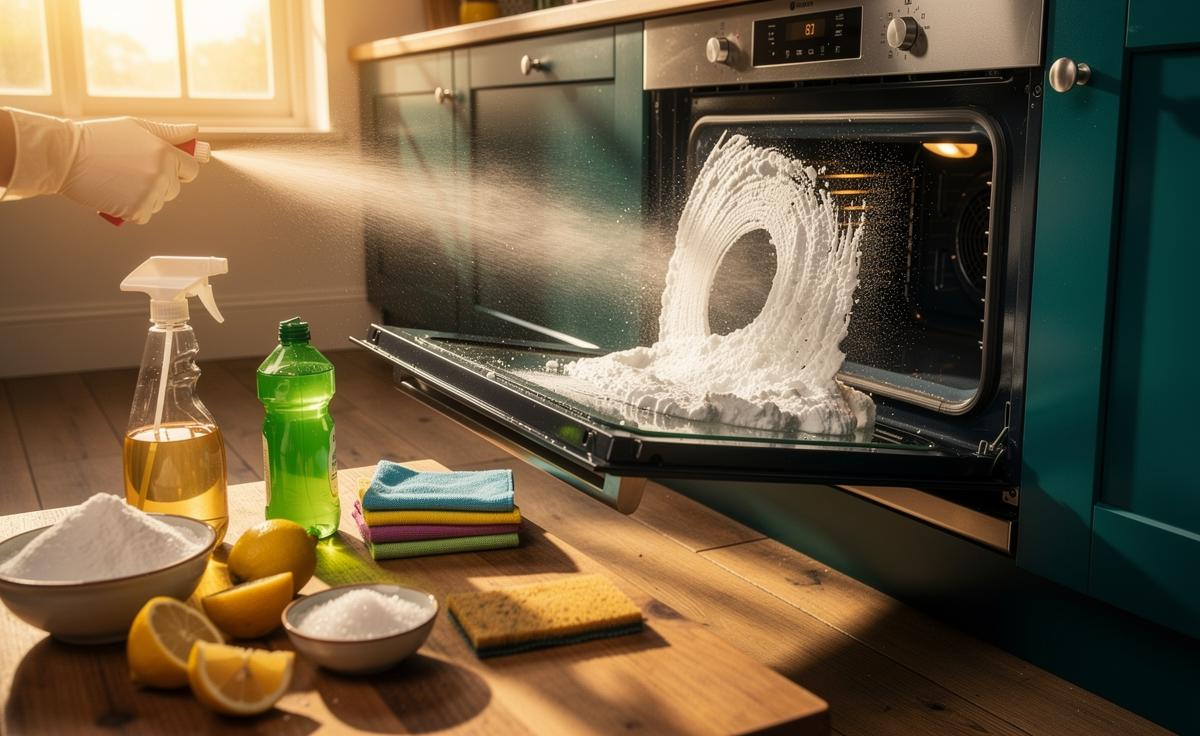
- 🧽 Step-by-step: mix a 3:1 bicarb paste with a dab of washing-up liquid, apply thinly, dwell 45–60 minutes (or overnight for heavy soil), soak racks in hot water with bicarb and salt, wipe, spritz vinegar to react, then rinse and heat at 100–120°C for 10 minutes to dry.
- 🛒 Staples and spend: supermarket bicarb, white vinegar, lemon, and salt clean most UK ovens for under £5; pick clear vinegar and use microfibre cloths for a streak-free finish.
- ✅⚠️ Pros vs. cons: low-cost, low-fume, enamel-kind and renter-safe, but slower and may need repeats; mind heating elements and gas ports, avoid razor blades on coated glass, and for severe carbon or sale-ready results, call a pro.
- 📅 Maintenance strategy: adopt a “soak, soften, shift” routine after roasts; little-and-often natural cleans protect seals, reduce odours, and keep efficiency high without caustic sprays.
In British kitchens, the oven is a workhorse—Sunday roasts, traybakes, and frozen chips all leave their mark. Yet many of us delay cleaning because harsh sprays sting the throat and make the whole house smell like a lab. Here’s a fresher route: use cupboard staples such as bicarbonate of soda, white vinegar, lemon, and a dash of washing-up liquid to lift grease and loosen carbon. With patience and the right sequence, natural ingredients can rival shop-bought cleaners while costing pennies and cutting fumes. Below, I’ll walk through the science, a step-by-step method tailored for UK ovens, quick-reference shopping tips, and pragmatic pros and cons so you can choose what works in a terrace flat or a busy family home.
The UK-Friendly Science Behind Natural Oven Cleaning
Natural oven cleaning succeeds because it pairs gentle chemistry with time. Bicarbonate of soda (alkaline) attacks acidic and oxidised food residues, softening the crust that bonds to enamel. When you later introduce an acid—typically white distilled vinegar—you trigger fizzing that lifts loosened particles. Add mild surfactants from a drop of washing-up liquid, and you reduce grease’s surface tension so it releases rather than smears. Think of it as soak, soften, then shift—rather than scorch, strip, and sniff.
Texture matters too. A salt sprinkle adds gentle abrasion without gouging enamel, while a nylon scrub pad provides mechanical lift. Lemon juice (citric acid) brightens glass and helps deodorise. UK reality check: many ovens have catalytic liners or pyrolytic self-clean modes. Catalytic panels are porous and self-greasing; thick pastes can clog them. Do not paste over catalytic liners—wipe them only with warm water when cool. For pyrolytic ovens, natural pre-clean saves time and smoke before running the high-heat cycle, but remove all paste first to avoid fumes. Finally, avoid prolonged contact of vinegar with bare aluminium trays; use bicarb and washing-up liquid there instead.
Step-by-Step Method Using Bicarbonate of Soda and Vinegar
Start cool. Remove racks and trays. Mix a paste: 3 tablespoons bicarbonate of soda to 1 tablespoon water, adding a pea-sized drop of washing-up liquid for glide. For very greasy doors, swap some water for lemon juice to boost cut. Wear gloves. Spread a thin, even coat over the enamel cavity and glass, keeping clear of catalytic panels, heating elements, gas ports, and door seals.
Let the paste work. For light soils, 45–60 minutes is enough; for burnt-on spills, leave 6–12 hours. While you wait, soak racks in very hot water with 2 tablespoons bicarbonate and a teaspoon of washing-up liquid. For extra bite, rub with a handful of damp salt like a gentle scouring crumb. Rinse and dry.
Return to the oven. Wipe off softened paste with a warm, wrung microfibre cloth, rinsing frequently. Mist or dab white vinegar over remaining haze; enjoy the fizz as residues lift. Stubborn edges? Nudge with a plastic scraper; avoid razor blades on coated glass. Finish with a warm, soapy wipe, then a clean-water rinse and dry to prevent streaks. Ventilate the kitchen and run the oven at 100–120°C for 10 minutes afterwards to drive off moisture and reveal any missed spots.
Natural Cleaning Staples for UK Ovens: Quick Reference
UK cupboards already hold the essentials. Bicarbonate of soda is sold in most supermarkets’ baking aisles; it’s the backbone of your paste. White distilled vinegar (clear, not brown malt) delivers fizz without staining, and supermarket own-brands are usually cheapest. Lemons add fragrance and light acid; salt offers scratch-free grit. A tiny amount of washing-up liquid functions as a gentle surfactant—crucial if you’ve cooked with goose fat or dripping. Used together, these items form a safe, low-cost system that scales from flats to family ranges.
Prices vary by region and retailer, but you can kit yourself out for under a fiver, and the supplies stretch to multiple cleans. For renters, natural methods help protect deposits by avoiding caustic discolouration around seals. For parents and pet owners, fewer fumes mean less disruption. Below is a compact guide to shop quickly and clean smartly.
| Ingredient | Main Action | Typical UK Price | Where to Buy | Notes |
|---|---|---|---|---|
| Bicarbonate of soda | Alkaline softener; mild abrasive | £0.60–£1.20 per 200–500g | Supermarkets, Wilko, online | Make a 3:1 paste with water; avoid clogging catalytic liners |
| White distilled vinegar | Acidic lift; residue remover | £0.40–£1.00 per 750ml | Supermarkets, discount stores | Use clear vinegar, not brown malt; keep off bare aluminium |
| Lemon | Deodorise; mild acid clean | £0.30–£0.50 each | Greengrocers, supermarkets | Great for glass and final wipe-down |
| Salt | Gentle abrasive | £0.50–£1.00 per 750g | Supermarkets | Use as a light scrub on racks and trays |
| Washing-up liquid | Grease-cutting surfactant | £0.50–£2.00 per bottle | Supermarkets | Add a drop to bicarb paste for fatty spills |
Pros and Cons, Safety, and When to Call a Pro
The natural route’s strengths are compelling. It’s low-cost, readily available, and low-fume, so you can clean late without fumigating the house. It’s kinder to enamel than aggressive alkalis and is flexible: ramp up dwell time instead of chemical strength. In my London test, a neglected fan oven (baked-on cheese and syrupy roast juices) yielded after an overnight bicarb paste and two vinegar passes; the glass door cleared without razor scraping. Time, not toxicity, did the heavy lifting.
Limitations do exist. Very old carbon or smoker’s tar may need multiple cycles—or mechanical help. Natural methods are slower and require more wiping and rinsing to avoid streaks. Be cautious with materials: avoid acids on bare aluminium, keep paste off catalytic liners, and never block gas ports or coat heating elements. If you’re selling your home or taking inventory photos, a professional clean can reset years of build-up in one visit. As a rule: if scrubbing reveals pitting, flaking enamel, or persistent odour after heat-up, pause and seek expert advice.
- Use natural methods for routine cleans and recent spills.
- Avoid pastes on catalytic or self-clean coatings; water only.
- Consider a pro or manufacturer-approved cleaner for severe carbon or safety-critical issues.
Natural ingredients make oven care less of a chore and more of a rhythm: a paste here, a soak there, and a calm kitchen without caustic clouds. Beyond saving money, you gain control—choosing dwell time over harshness and protecting finishes that keep an appliance efficient for years. Small, regular cleans beat dramatic rescues every time. As you plan your next roast, what part of your oven would benefit most from a gentle, targeted clean—and which of these natural steps will you try first?
Did you like it?4.4/5 (20)