In a nutshell
- 🚪 Build a doorway moat: layer entrance matting (outdoor scraper, indoor absorbent, hallway runner) plus boot trays to cut grit and reduce wicking into carpet and underlay.
- 💨 Obey the 24-hour drying rule: keep indoor RH 50–55%, blot and extract fast, use cross-breeze fans, and choose the right dehumidifier (compressor vs desiccant) to stop mould and odours.
- 🧼 Clean smarter in wet weeks: prioritise HEPA vacuuming and low-moisture encapsulation/dry compounds; reserve hot-water extraction for heavy soil with controlled moisture—because more water isn’t better.
- 🧪 Treat winter stains by chemistry: dissolve road salt with a mild acidic rinse, use enzyme treatments for pet odours, deploy tannin removers for tea/wine, and follow WoolSafe guidance; odour control starts at the source.
- 📈 Make maintenance measurable: vacuum traffic lanes daily, wash mats weekly, lift furniture on protective tabs, verify drying with a hygrometer, and choose the least-wet effective method during rainy spells.
Britain’s weather isn’t just a national talking point—it’s a maintenance mandate. When persistent rain meets plush pile, the result can be wicking, musty odours, and premature wear. The good news: with the right routine, UK carpets can outlast soggy seasons and still look showroom-ready. This guide, grounded in practical know-how and field-tested routines, sets out a moisture-first strategy: entrance matting that actually works, dehumidifying that prevents mould, and cleaning choices that protect wool and synthetics alike. We’ll also tackle winter-specific stains—from road salt to red wine—while weighing DIY vs. professional tactics. A carpet doesn’t fail in a storm; it fails when moisture lingers. Here’s how to stop that from happening.
Build a Moisture Defence at the Door
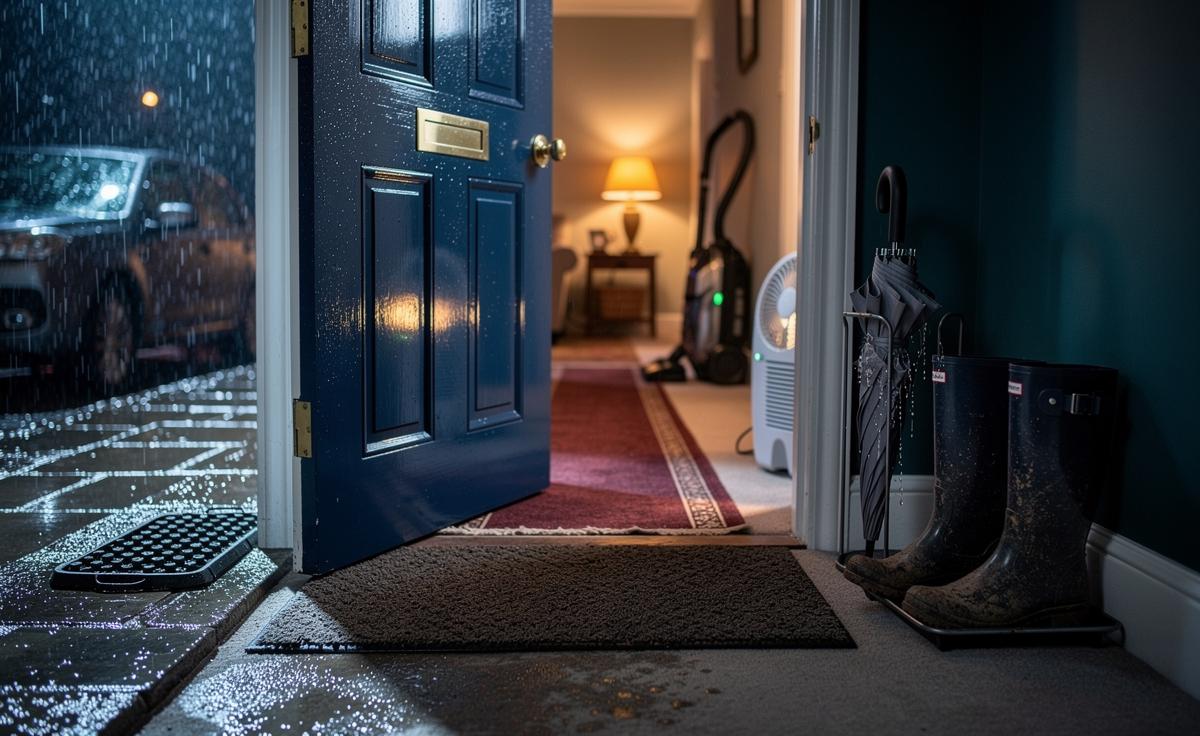
Rainy-season carpet care starts before a single footfall reaches the pile. Create a layered entrance zone that scrapes, absorbs, and stages debris away from your living areas. Outside, a textured rubber scraper mat pulls off grit that would otherwise cut fibres like tiny knives. Inside, a microfibre or cotton absorbent mat drinks rainwater before it wicks under skirting or the first runner. For hallways, a low-profile washable runner catches the last of the splash and fine soil. Add a boot tray and umbrella stand; both are cheap insurance against migrating damp. If your matting is saturated, your carpet is already working overtime.
| Layer | Function | Standout Benefit |
|---|---|---|
| Outdoor Scraper Mat | Removes grit and heavy soil | Protects fibre tips from abrasion |
| Indoor Absorbent Mat | Soaks up rain and slush | Reduces wicking into underlay |
| Hallway Runner | Captures fine dirt over distance | Extends clean zone across walking lines |
Choose mats with non-staining, non-marking backings to avoid plasticiser transfer onto vinyl or hardwood nearby. Wash indoor mats weekly in wet spells; vacuum runners every other day with a beater-bar set to the carpet height. Swap to darker, solution-dyed tones in winter—an editorially unglamorous but practical choice. And remember: no mat can compensate for wet shoes left to drip over carpet—use a rack.
Drying, Dehumidifying, and Airflow: The 24-Hour Rule
Water is inevitable; lingering moisture is optional. Aim to keep indoor relative humidity (RH) around 50–55% and act quickly on wet patches. Blot with white towels, extract with a wet vac, then drive airflow across—not just at—the carpet using a fan set to low-to-medium. Open trickle vents and run gentle heat to encourage evaporation. For winter, pair heat with a dehumidifier, ideally placed in the same room and set to continuous mode until the tank settles to a slow fill. The golden rule: dry spills and wet footfall within 24 hours to prevent mould and odour formation.
- Compressor dehumidifiers: Efficient in warmer rooms; quieter; economical for day-to-day UK use.
- Desiccant dehumidifiers: Better at low temperatures; useful for unheated spaces and night cycles.
- Airflow tip: Angle fans to create cross-breezes; avoid pointing directly down, which can force moisture deeper.
Quick-dry playbook: extract; lift furniture on protective tabs; slightly tent the carpet edge if safe to do so; monitor with a small hygrometer. If a subfloor or underlay feels damp after 24 hours, call a restorer—capillary hold can keep moisture hiding where a typical home fan cannot reach. Drying is a system, not a single machine.
Cleaning Methods That Work in a British Downpour
Winter dirt is ultra-fine; vacuuming must step up. Use a bagged HEPA vacuum (better airflow as the bag fills) and make slow, overlapping passes; for wool, lower the agitation to protect natural scales on fibres. When deeper cleaning, consider encapsulation or dry compound methods during sodden weeks; they minimise re-wetting and speed return-to-use. Reserve hot-water extraction (HWE) for heavier soiling—but only with controlled moisture, warm (not scalding) solution, and powerful extraction to limit dwell in the underlay. Why “more water” isn’t always better: oversaturation fuels wicking, browning, and slow-dry odours.
- DIY Wet Extraction — Pros: Immediate control, cost-saving for spot jobs.
- DIY Wet Extraction — Cons: Weak vacuums leave water behind; detergent residue attracts soil.
- Professional HWE — Pros: Strong extraction, fibre-appropriate chemistry, faster dry times.
- Professional HWE — Cons: Scheduling in peak season; higher upfront cost.
Between deep cleans, a light encap pass on traffic lanes can keep appearance high without risking soggy backing. Always finish with a neutralising rinse on alkaline treatments to protect wool and prevent re-soiling. Choose the least-wet method that achieves the result you need.
Stains, Odours, and Winter Bacteria: A Casebook
On a February Saturday in Manchester, a hallway soaked by dripping coats left a homeowner battling a persistent musty odour. The fix wasn’t perfume; it was sequence: controlled extraction, enzyme-based deodoriser on the primary source, and a desiccant dehumidifier overnight. Likewise, a Harrogate reader faced road salt whitening on a wool stair runner—solved with a gentle acidic neutraliser (think mild white-vinegar solution, lightly applied and blotted) followed by clear-water rinses. Most winter stains are chemistry problems before they’re colour problems.
- Mud and clay: Let dry, vacuum thoroughly, then treat the remaining shadow with a mild neutral detergent; avoid scrubbing.
- Road salt/grit: Dissolve deposits with a dilute acid rinse; blot, don’t rub; finish with plain water.
- Tannins (tea, red wine): Use a dedicated tannin remover safe for wool; limit dwell; neutralise and rinse.
- Pet odours after rainy walks: Enzyme treatment on the affected patch; keep damp for the enzyme’s active window; then dry fast.
Patch-test in an inconspicuous spot and follow WoolSafe guidance where applicable. If browning appears during drying, re-mist lightly with a neutraliser and extract again. For recurring mustiness, inspect skirting, thresholds, and underlay for hidden moisture reservoirs. Odour control is source control plus rapid drying, not heavy fragrance.
Rainy months don’t have to mean dingy pile or damp-smelling lounges. With smart entrance matting, vigilant RH control, and season-savvy cleaning, UK carpets can thrive even when pavements glisten. Build routines you can keep: daily vacuuming on traffic lanes, fast action on wet patches, and scheduled low-moisture maintenance until storms pass. When in doubt, choose the least-wet effective method and verify with your fingertips and a hygrometer, not assumptions. As your own home’s “facilities manager,” what’s the one change—be it a wider runner, a better dehumidifier, or a new cleaning method—you’ll implement before the next cloudburst rolls in?
Did you like it?4.6/5 (25)