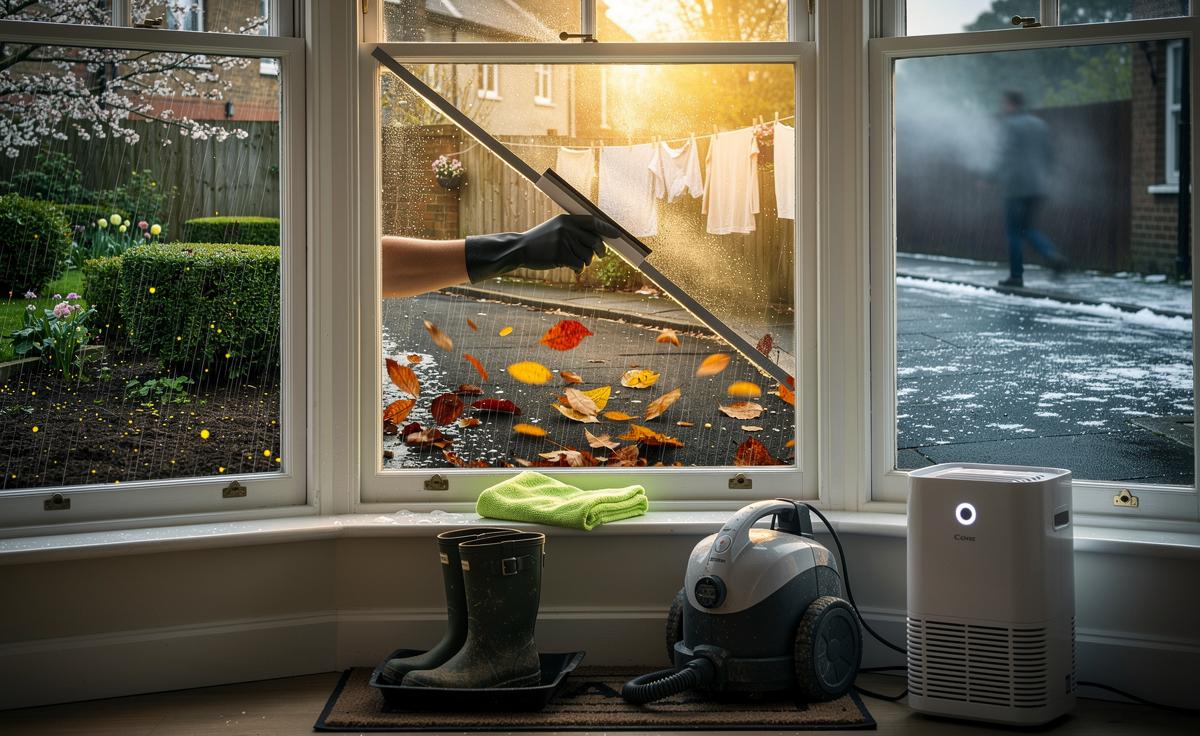
In a nutshell
- 🌦️ Align cleaning with the forecast: use ventilation timing, UV-powered drying, and sealed thresholds to cut labour, odours, and allergens.
- 🌸 Tackle spring pollen and mud: vacuum with HEPA, dust with microfibre, ventilate after rain, and add a two‑mat system plus a boot tray.
- ☀️ Beat summer odours: rotate enzyme-based cleaners, do nightly fridge resets, cross‑ventilate while avoiding roadside soot/PM2.5, and line‑dry during peak UV.
- 🍂 Control autumn moisture: keep RH near 50% with a hygrometer and dehumidifier, dry laundry in one ventilated room, and clear gutters to prevent damp.
- ❄️ Winterproof interiors: enforce shoes-off, mop with pH‑neutral solutions, squeegee windows, dust radiators, and use pulse airing to curb condensation.
Britain’s famously changeable weather can turn a spotless home into a moving target. From spring’s pollen spikes to winter’s condensation, each season shapes how dirt travels, settles, and smells. The trick is to tune your routine to the forecast—ventilating when air is dry, drying laundry when UV is high, and sealing out grit and moisture before they cross the threshold. I’ve tested seasonal tweaks across urban flats and rural cottages, and the most effective strategies are simple, repeatable, and timed to the sky rather than the calendar. Think of the weather as your cleaning co‑pilot: work with it, and your chores shrink; work against it, and they multiply.
Spring Showers and Pollen: Resetting After Winter
Spring in the UK brings alternating showers, gusts, and pollen bursts. The temptation is to fling windows wide, but timing matters. Pollen counts usually rise on dry, breezy mornings; wait until late morning after a shower to ventilate without importing allergens. Opening windows right after rainfall often reduces indoor pollen dusting substantially. Vacuum with a HEPA filter twice weekly, prioritising skirting boards, window sills, and fabric surfaces where pollen sticks. Switch to microfibre for dusting; its split fibres trap rather than waft particles.
Launder curtains, throws, and cushion covers according to care labels, adding an extra rinse if you line-dry outdoors on high-pollen days. For mattresses and upholstery, a slow pass with a vacuum’s upholstery tool outperforms frantic scrubbing. In a draughty Manchester terrace I visited, a simple habit—wiping exterior window frames and sills after rain—cut re-entering grime by half and kept interior panes streak-free longer.
Target mud tracks after spring storms with a shoe-station near the door: a coarse mat outside, an absorbent mat inside, and a boot tray. Mop with a neutral cleaner; acidic mixes can strip protective finishes on engineered wood. Short, strategic bursts of ventilation—10 minutes, two or three times daily—refresh air without feeding dust.
Summer Heat and Odours: Drying vs. Dusting
Summer is your drying season, but it’s also prime time for odours. Heat accelerates bacterial activity in bins, pet areas, and damp corners. Rinse food caddies frequently and rotate in an enzyme-based cleaner to break down residues that soap leaves behind. Line-dry early, when UV is strongest and air is moving; by contrast, leaving washing out past dusk can invite evening moisture back into fibres. High heat dries faster, but stale air breeds smells—ventilation trumps temperature for odour control.
Dust behaves differently in summer: static drops with humidity, so soft microfibre cloths with light misting outperform feather dusters. Beat rugs outdoors and vacuum slowly—speedy passes miss embedded grit. For fridges working overtime, adopt a two-minute nightly reset: wipe handles, tidy shelves, and empty drip trays. A Birmingham reader who added this micro-routine reported fewer Saturday deep cleans and far less food waste.
Why “throwing windows open all day” isn’t always better: near busy roads, hot thermals carry soot and PM2.5. Ventilate at the back of the home or during lower-traffic periods. Use fans to move air across open windows, not at them, to avoid sucking in pollutants. Cross‑ventilation for 10–15 minutes clears indoor pollutants faster than a single window propped open for hours.
- Pros: Faster laundry drying, UV sanitising, easier stain lifting.
- Cons: Stronger odours, airborne soot near roads, insect ingress.
- Tip: Deodorise bins with bicarbonate; refresh pet beds weekly in full sun.
Autumn Rains and Leaves: Moisture Control Indoors
Autumn is when the outside tries to come inside. Leaves hitchhike on soles, and rain drives moisture into entryways. Build a three-layer defence: scraper mat outdoors, absorbent mat inside, then a washable runner. Vacuum this zone daily in wet spells; five minutes here saves fifty elsewhere. Stop moisture at the door and you stop most of the cleaning that follows. For pets, keep a towel rail and paw-cleaning spray by the back door to prevent pawprints across carpets.
Indoors, target relative humidity around 50%. Use a budget hygrometer to spot rooms creeping above 60%, where mould thrives. Dry laundry in a single, well-ventilated room with the door shut and a window cracked; a small dehumidifier placed nearby halves dry time and reduces condensation. In a Leeds semi, relocating the drying rack under a ceiling fan (low speed) and adding a drip mat protected painted skirting from wicking stains.
Gutters and downpipes affect interior cleaning more than you think: overflowing gutters seed damp patches on exterior walls that telegraph inward as musty smells. Clear them before storms set in. For kitchens, switch to rinse-and-wipe cooking: lid pans, use extractor fans, and squeegee splashbacks after steamy sessions. Moisture managed in minutes rarely becomes mould managed in months.
- Entry kit: Boot tray, hooks for wet coats, washable runner, microfibre mop.
- Weekly focus: Window tracks, skirting behind radiators, bath sealant inspection.
- Avoid: Leaving soggy mats to “air”; wash and fully dry instead.
Winter Grit and Condensation: Protecting Floors and Windows
Winter cleaning is a duel with road salt, grit, and condensation. Institute a shoes-off policy and double up mats. Mop sealed hard floors with warm water plus a neutral cleaner; salt residues are alkaline and can turn wood finishes cloudy. For stone, avoid vinegar and use a pH-neutral product. Keep a small brush-and-pan set by the door to capture granules before they scratch. Every gram of grit you trap at entry saves minutes of downstream scrubbing.
Condensation thrives on cold glass and metal. Morning routine: pull blinds up, open trickle vents, and squeegee panes top-to-bottom. Follow with a microfibre wipe of frames where mould starts. Shower rooms need habit, not heroics: run the extractor 15 minutes post‑use and leave the door ajar. A Glasgow flat I visited cut black-spot regrowth by switching to this regimen plus a weekly wash of silicone seals with diluted hydrogen peroxide (check manufacturer guidance).
Radiators gather dust felt, which burns and smells on first heat. Slide a radiator brush behind fins, then vacuum the baseboard line. If energy prices make window-open airing painful, try “pulse airing”: 5–7 minutes, twice a day, when the heating is on; warm air pushes moisture out faster. Short, hot bursts of ventilation cost less heat than long, tepid leaks and prevent damp from taking hold.
| Season | Main Threat | Open Windows? | Best Drying Time | Cleaning Focus |
|---|---|---|---|---|
| Spring | Pollen, mud | After rain, late morning | Late morning–early afternoon | HEPA vacuum, microfibre dusting |
| Summer | Odours, soot | Back rooms, off-peak traffic | Midday UV, avoid dusk damp | Bins, fridge resets, quick cross-vent |
| Autumn | Moisture, leaves | Short bursts, monitor RH | With dehumidifier assist | Entryway defence, gutter checks |
| Winter | Grit, condensation | Pulse airing, trickle vents | Indoors with good airflow | Squeegee glass, neutral-floor care |
Cleaning with the British weather isn’t about perfection; it’s about smart timing and small, consistent habits. When you align tasks with forecasts—ventilating after showers, drying in sunbursts, and sealing entry points—you trade marathon scrubs for tidy sprints. Keep a simple seasonal checklist by the door, and adjust weekly based on wind, humidity, and daylight. Over time, these micro-decisions protect finishes, save energy, and keep allergens down. Which seasonal tweak—entryway upgrades, pulse airing, or UV-powered laundry—will you test first in your home, and how will you tailor it to your local microclimate?
Did you like it?4.5/5 (20)