In a nutshell
- 🦠 Door handles are high‑touch surfaces and fomites where viruses and bacteria can persist for hours to days; a daily door wipe cuts the chain of transmission and removes invisible dirt.
- ⏱️ Follow a 60‑second routine: clean first, then disinfect; use products with EN 1276/EN 14476 claims, keep proper contact time, let surfaces air‑dry, and never mix chemicals.
- 🔁 Small, repeatable habits beat deep cleans: habit stacking (e.g., wiping while locking up) smooths consistency, trims microbial peaks, and reinforces shared hygiene norms.
- 🏠 Prioritise hotspots: home (front door, loo, kitchen), offices (meeting rooms, lift lobbies); in public carry sanitiser and avoid face‑touching; step up during outbreaks and match methods to materials.
- 🧪 Choose smartly: 70% alcohol (fast), 0.1% bleach (broad‑spectrum), hydrogen peroxide (material‑friendly), and detergent for soil removal; use microfibre, gloves, and ventilation for safe, effective results.
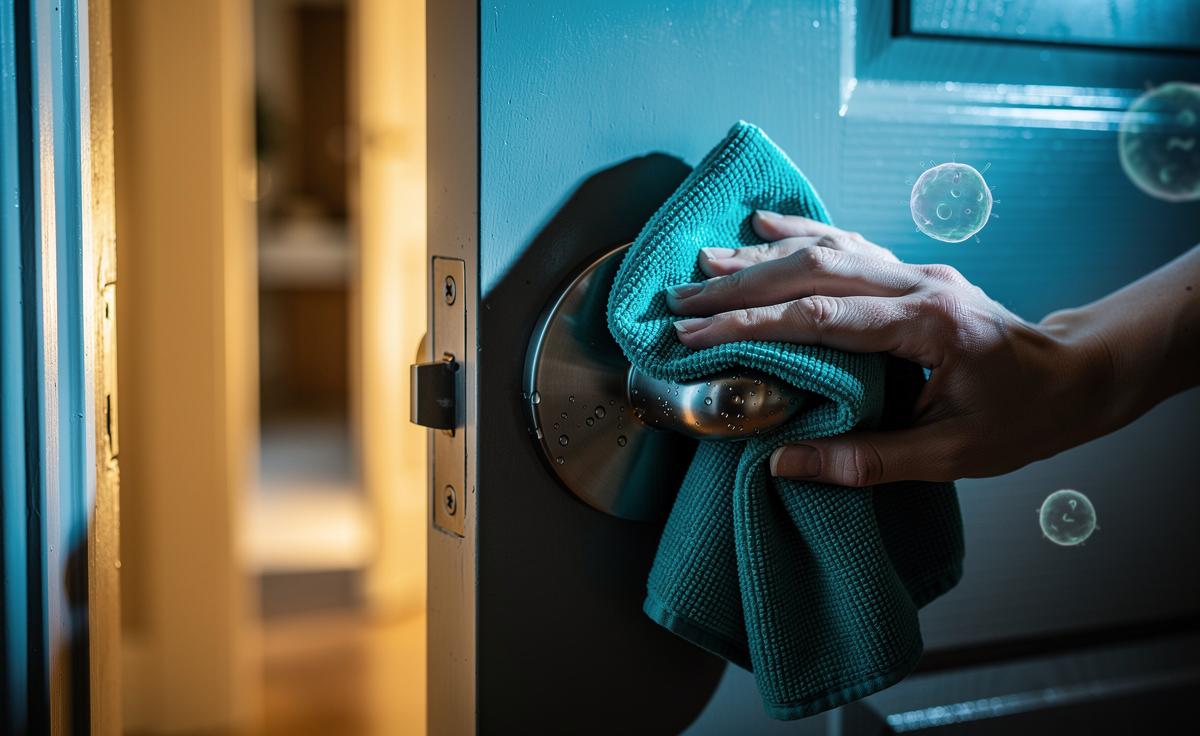
Twist, push, pull—every door you touch is a miniature meeting place for other people’s microbes. In a nation of commuters, school runs, and shared hallways, a daily door wipe is a modest act that repays itself many times over. It’s not about clinical sterility or guilt; it’s about targeted hygiene—the right action, at the right place, at the right time. In sixty calm seconds, you can cut a key link in the chain of transmission, reducing the chance that a sniffle, a stomach bug, or a lingering winter virus rides in on your handle. Here’s how that tiny ritual protects against invisible dirt—and why it’s worth making it a habit.
What Lives on a Door Handle
Door furniture is a textbook high‑touch surface and a classic fomite: a place where microbes wait for a new host via fingertips. Hands carry a moving collage of skin flora, food residues, and pathogens we pick up on buses, in loos, at desks, and on phones. Studies have shown that common culprits—rhinoviruses, norovirus, and bacteria such as Staphylococcus aureus and E. coli—transfer readily from moist hands to smooth metals and plastics. Because multiple people touch the same handle in quick succession, the exposure window is constant, which is precisely what makes doors such efficient spreaders during cold and flu season.
The science is blunt: microbes don’t need to linger for long to cause trouble, and some can persist on stainless steel and plastics for hours or days, especially in cool, low‑light corridors. That’s why UK guidance repeatedly flags “frequently touched surfaces” for regular cleaning. A daily wipe reduces microbial load, breaks up light biofilms, and removes the bodily oils that help pathogens stick. Just as important, it introduces a micro‑pause—a mindful check that reminds us to wash or sanitise our hands before the kettle, the fridge, and supper.
| Hotspot | Likely Contaminants | Typical Survival Window | Best Wipe Option |
|---|---|---|---|
| Metal handle/plate | Respiratory viruses, skin bacteria | Hours to days | Detergent clean, then 70% alcohol or 0.1% bleach |
| Painted wood door | Mixed bacteria, viral particles | Hours | Mild detergent; alcohol wipe if paint is durable |
| uPVC/plastic handle | Norovirus, faecal bacteria | Hours to days | Detergent, then EN 14476‑certified disinfectant |
| Keypad/entry button | Mixed touch‑borne microbes | Hours | Alcohol wipe with full contact time |
The 60-Second Routine That Works
Clean first, then disinfect—never the other way round. That one sentence is the heart of a reliable routine. Cleaning with a detergent or damp microfibre removes grime and the organic matter that shields microbes. Disinfection then knocks back what remains. Done daily, you don’t need heroics—just consistency and a sensible product.
- 10 seconds: Wash or sanitise your hands. Put on gloves if using bleach.
- 20 seconds: Wipe the handle, plate, lock and frame area with a damp, soapy cloth or a ready‑to‑use cleaning wipe. Target the underside where fingers hook.
- 20 seconds: Apply a disinfectant (check for EN 1276/EN 14476 claims). Keep the surface visibly wet for its stated contact time.
- 10 seconds: Let it air‑dry. Avoid buffing immediately—evaporation is part of the process.
Product choices, in brief—Pros vs. Cons:
- 70% alcohol wipes: Fast, residue‑light; may evaporate too quickly on warm days and can dull some lacquers.
- 0.1% sodium hypochlorite (bleach): Broad‑spectrum and affordable; can corrode metals and stain fabrics; ventilate well.
- Hydrogen peroxide cleaners: Effective and material‑friendly; typically pricier.
- Detergent only: Good soil removal; lacks the kill claim—use when surfaces are visibly dirty before disinfecting.
Never mix chemicals, and spot‑test brass or painted doors. If you prefer fewer disposables, assign a labelled microfibre to “doors” and hot‑wash it at the end of the week. The aim is not perfection; it is a reliable, 60‑second break in transmission.
Why Small Habits Beat Deep Cleans
We love a weekend blitz: rubber gloves on, radio up, house gleaming. But germs move daily, and so should your defence. A tiny, repeatable habit outperforms a monthly marathon because it intercepts risk at the moment it appears. Picture the front door after the school run or a supermarket trip: new microbes arrive, and the window for transfer opens immediately. A quick wipe at teatime shrinks that window to minutes, not days.
Why a weekly blitz isn’t always better: occasional deep cleans create bursts of control followed by long lulls. By contrast, a 60‑second door ritual stacks neatly onto existing cues—locking up at night, feeding the cat, setting the alarm. Behavioural science calls this “habit stacking”, and it works because it reduces friction. In my own London flat, parking a small caddy by the door (wipes, a microfibre, and a pump of sanitiser) turned an intention into an anchor. The visible wins were modest—fewer smudges, no sticky patches after parties—but the real prize was psychological: a sense that the home’s boundary was actively tended.
There’s also a social dividend. Guests grasp a spotless handle and intuit care. Workmates notice in shared corridors and copy it. That’s how norms form—and how a private habit nudges public hygiene without a single poster.
Where and When to Wipe: Homes, Offices, and Public Spaces
Not all doors are equal. At home, prioritise the front door, the loo, and the kitchen. In offices, it’s meeting rooms, kitchenettes, and the lift lobby. Schools and GP surgeries already run schedules for high‑touch points; households can borrow the same logic, scaled sensibly.
- Homes: Front and back doors daily; bathroom handles after each cleaning routine or when someone’s ill; fridge and oven pulls every couple of days.
- Offices: A quick pass at start or end of day; agree a rota or fold it into facilities’ rounds. Use EN 14476 products near shared snacks and kettles.
- Public spaces: You can’t wipe every train door; carry a pocket sanitiser and avoid touching your face until you can clean your hands.
Timing tips:
- After deliveries or visitors.
- During local outbreaks (winter vomiting bug, flu surges).
- When anyone at home is poorly—step up the frequency and add light switches to the loop.
Material matters: lacquered brass loves mild detergent and a soft cloth; stainless steel tolerates alcohol; painted timber appreciates gentleness. Always read the label, and mind ventilation. The goal is durable cleanliness, not damaged hardware. Fold this into your closing‑up ritual and you’ll barely notice the effort—just the calm of a well‑kept threshold.
A door is a story of comings and goings, and the fingerprints that write it. A daily 60‑second wipe is a small, sane insurance policy: it trims microbial peaks, signals care to others, and turns “cleaning” from a chore into a brief, mindful pause. You don’t need hazmat kit or hours—just a cloth, a suitable product, and the habit to use them when it counts. Little acts, done often, beat grand gestures done rarely. If one minute could routinely block a chain of infections at your threshold, would you take it—and which handle will you start with today?
Did you like it?4.6/5 (23)